Posts Tagged ‘poetry’

“Now I Become Myself”

I have been dissolved and shaken / Worn other people’s faces” — May Sarton

My early introduction to May Sarton’s work was through her diary, Journal of a Solitude. I was new to personal writing at the time, and I admired how Sarton gracefully shared her private and public worlds — her beloved garden; domestic life in New Hampshire; her conflicting needs for solitude and companionship. Reading more of her work over the years, I knew I’d found a kindred spirit.

“Now I Become Myself” first struck me as a song of elder wisdom, a declaration of authentic power. Feeling her “own weight and density,” the poet has outgrown the petty insecurities of youth — including its sense of urgency. Yet the poem speaks to readers of all ages. I gave it to a friend on her 70th birthday and was thrilled to learn it is now one of her favorites. My friend was especially moved by the line, “Now there is time and Time is young.”  Which lines speak to you? –CL

Now I Become Myself
By May Sarton

Now I become myself. It’s taken
Time, many years and places;
I have been dissolved and shaken,
Worn other people’s faces,
Run madly, as if Time were there,
Terribly old, crying a warning,
“Hurry, you will be dead before –”
(What? Before you reach the morning?
Or the end of the poem is clear?
Or love safe in the walled city?)
Now to stand still, to be here,
Feel my own weight and density!
The black shadow on the paper
Is my hand; the shadow of a word
As thought shapes the shaper
Falls heavy on the page, is heard.
All fuses now, falls into place
From wish to action, word to silence,
My work, my love, my time, my face
Gathered into one intense
Gesture of growing like a plant.
As slowly as the ripening fruit
Fertile, detached, and always spent,
Falls but does not exhaust the root,
So all the poem is, can give,
Grows in me to become the song,
Made so and rooted by love.
Now there is time and Time is young.
O, in this single hour I live
All of myself and do not move.
I, the pursued, who madly ran,
Stand still, stand still, and stop the sun!

– Reprinted from Selected Poems of May Sarton edited by Serena Sue Hilsinger and Lois Brynes; W.W. Norton & Company; 1978–

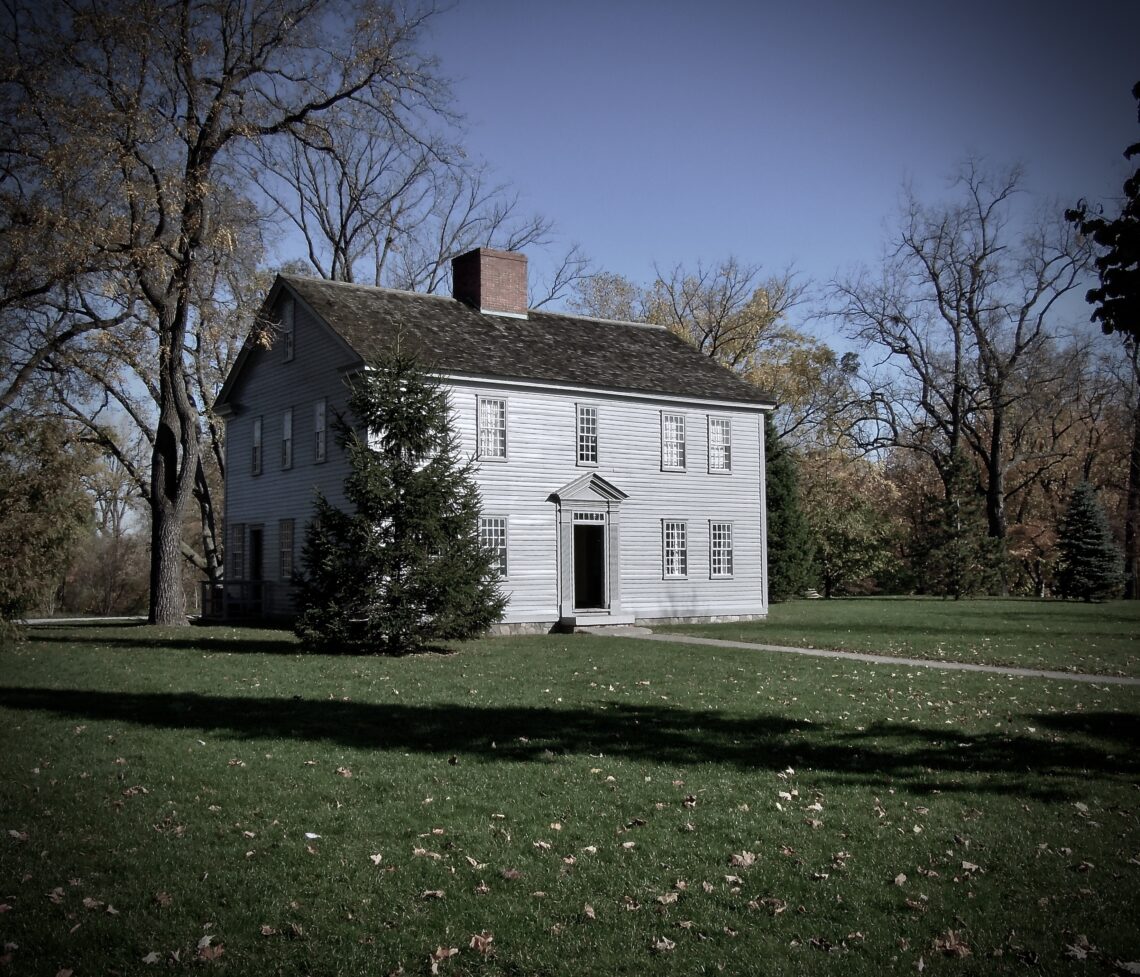
–Top photo: Detail from “Book of Shadows,” an altered book, by Cindy La Ferle –

This post is part of a weekly poetry appreciation series.  To read more, please click on Poems to inspire in the CATEGORIES column at right. As always, I welcome your recommendations, too.

permalinkRead More CommentComments (15) CatJust for writers, Poems to inspire

“Advice to Writers”

The more you clean, the more brilliant your writing will be.” — Billy Collins

Last week I shared Jane Hirshfield’s “The Poet” (about a writer at her desk), and in the comment section we all compared notes on where we do our own creative projects.

Writers are inherently messy — in a good way. We save scraps of paper scribbled with notes and ideas. We collect more pens and blank journals than we’ll ever use. And when we’re in the middle of editing an article or composing a poem, we litter and trash our workspace. But I’m not convinced that’s what Billy Collins is talking about in the poem below.

It’s open to interpretation, of course, but I like to think Collins is playing with the idea of clearing the mind to make room for fresh ideas. Each time I begin a new project or assignment, for example, I need to push past my fears, self-imposed limits, and creative road blocks.

Or maybe Collins is talking about writing rituals — the small acts we must perform (procrastination?) before we can lift our “yellow pencil.”  What do you think? In any event, I think you’ll agree that Collins has both a wicked sense of humor and a knack for spotting the beauty in the ordinary. –CL

ADVICE TO WRITERS
By Billy Collins

Even if it keeps you up all night,
wash down the walls and scrub the floor
of your study before composing a syllable.

Clean the place as if the Pope were on his way.
Spotlessness is the niece of inspiration.

The more you clean, the more brilliant
your writing will be, so do not hesitate to take
to the open fields to scour the undersides
of rocks or swab in the dark forest
upper branches, nests full of eggs.

When you find your way back home
and stow the sponges and brushes under the sink,
you will behold in the light of dawn
the immaculate altar of your desk,
a clean surface in the middle of a clean world.

From a small vase, sparkling blue, lift
a yellow pencil, the sharpest of the bouquet,
and cover pages with tiny sentences
like long rows of devoted ants that followed you in from the woods.

–Reprinted from The Apple That Astonished Paris, by Billy Collins (The University of Arkansas Press); 1988

– Top photo “Blue Glass” (copyrighted) by Cindy La Ferle –

permalinkRead More CommentComments (14) CatEvents and news, Poems to inspire

Liberty & poetry for all

“Poetry is the synthesis of hyacinths and biscuits.” — Carl Sandburg

There’s an article on sidewalk poetry this week in the Christian Science Monitor. Permanently stamped on city sidewalks, poetry is part of a new public arts project in St. Paul, Minn. This thrills me no end, since I’ve always thought poetry should be a part of everyday life — not reserved for lofty occasions like funerals or retirement parties or 50th birthday bashes.

Poetry inspired me early on. A quirky only child, I spent a fair amount of time reading alone in my pale blue bedroom or in a wooden playhouse in my backyard. I wasn’t entirely antisocial, but found many of my best friends in a parallel universe of words occupying a small bookshelf in my closet.  And while I never considered myself a poet, I composed silly limericks while the neighborhood kids played dodge ball.

I like to encourage everyone to make a habit of reading poetry. Reading a poem a day will change the way you look at your world, and if you happen to be a writer, it will enhance your own work. Start with accessible contemporary poets like Mary Oliver, Jane Kenyon, and David Whyte. They’re easy to digest — but soulful and satisfying.

And you if like your poetry with a twist, try Billy Collins.

Collins (also an only child) served as Poet Laurete of the United States from 2001 to 2003. He just published another fabulous poetry collection, Ballistics, which will appeal to even the most incorrigible cynic who claims to dislike poetry.  Like his legions of devoted fans, I admire how Collins illuminates the truth in the smallest details of ordinary life.  And many of his poems are laugh-out-loud funny. Can you tell how much I love this guy? Here’s one of my new favorites:

Evasive Maneuvers
By Billy Collins

I grew up hiding from the other children.
I would break off from the pack on its patrol of streets every Saturday

and end up alone behind a hedge
or down a dim hallway in a strange basement.
No one ever came looking for me,
which only added to the excitement.

I used to hide from adults, too,
mostly behind my mother’s long coat
or her floral dress depending on the season.

I tried to learn how to walk
between my father’s steps while he walked
like the trick poodle I had seen on television.

And I hid behind books,
usually one of the volumes of the encyclopedia
that was kept behind the glass in a bookcase,
the letters of the alphabet in gold.

Before I knew how to read,
I sat in an armchair in the living room
and turned the pages, without a clue

about the worlds that were pressed
between D and F, M and O, W and Z.

Maybe this explains why
I looked out the bedroom window
first thing this morning
at the heavy trees, low gray clouds,

and said the word gastropod out loud,
and having no idea what it meant,
went downstairs and looked it up
then hid in the woods from my wife and our dog.

–from Ballistics, copyright 2008 by Billy Collins; Random House

permalinkRead More CommentComments (6) CatJust for writers, Sunday columns/blogs
CSS Template by RamblingSoul | Tomodachi theme by Theme Lab