Archive for the ‘Columns & essays’ Category

Survival guide for grads

I always pass along good advice. It is the only thing to do with it, since it is never of any use to oneself.” – Oscar Wilde

FamilyphotonewIt’s graduation season. The flowering trees are in bloom, everywhere, and suddenly I’m flooded with sweet memories of my son’s baccalaureate ceremonies at Shrine High School (2004) and the University of Notre Dame (2008).

Of course, I’ve got an album crammed with photos documenting both events. In one of my favorite pictures, Nate stands tall under incredibly blue skies. He looks proud, relieved, and a little awkward as he balances the mortarboard on his head.

This is the time of year when parents, mentors and elected officials like to pass along pithy nuggets of wisdom or advice to students who’ll be starting college or launching new careers. To all our local graduates of 2013, I send my very best wishes for your future. Meanwhile, here’s a rehash of the Survival Tips I wrote for Nate before he left for college.

*Relationships, like cars, need regular upkeep. Maintain the good friendships you’ve made.

*Learn from your adversaries. The people who push our buttons tend to reflect qualities we dislike in ourselves.

*Encourage others to talk about themselves. You’ll make a great first impression and learn something new.

*If you settle for less, that’s exactly what you’ll get. Strive for decency and expect nothing less from everyone you hang out with.

*The notion that everyone is having a better time somewhere else is one of the world’s dumbest illusions. Refuse to believe it.

*Losing is a great character builder. If your best effort misses the mark, ask yourself what you can learn from the loss.

*Choose a career you can be proud to list on every form you’ll have to fill out.

*Be a community builder. If we can’t make peace with our neighbors, there’s no hope for the rest of the world.

*It can be lonely at the top. Be careful not to alienate loved ones while achieving your goals.

*Be thoughtful. Good manners were designed to make others feel comfortable and respected.

*Get enough sleep.

*Show up or don’t sign up. Make good on your word. Never volunteer out of guilt or for personal gain; give from the heart.

*Keep your faith, but learn about the great religions of the world. Never publicly criticize someone’s religious beliefs. Self-righteousness is a huge turn-off.

*Stay in shape; enjoy a recreational sport.

*Spend time alone. Creative ideas and solutions are sparked in solitude.

*Never leave your underwear on the floor. As every good room mate will tell you, neatness is essential in cramped spaces.

*Always take the high road. Admit your blunders and apologize if you’ve hurt someone.

*Return what you borrow.

*Go easy on the junk food. Pay attention to what you eat, where it came from, and why you’re eating it.

*Find your inner compass and stop seeking approval from others. Be too busy to wonder what other people think of you.

*Spend time outdoors. A walk in the woods is the best antidepressant.

*Splurge on comfortable shoes.

*Don’t limit your shopping to chain stores. Support local businesses and discover the heart and soul of every new location.

*Travel is the best way to learn about the world, but stay on the lookout for a place to set down roots.

*Savor your memories but don’t live in the past. Anyone who insists their high school or college years were “the best” is stuck in a rut. Life gets richer and juicier as you move on. Enjoy every minute.

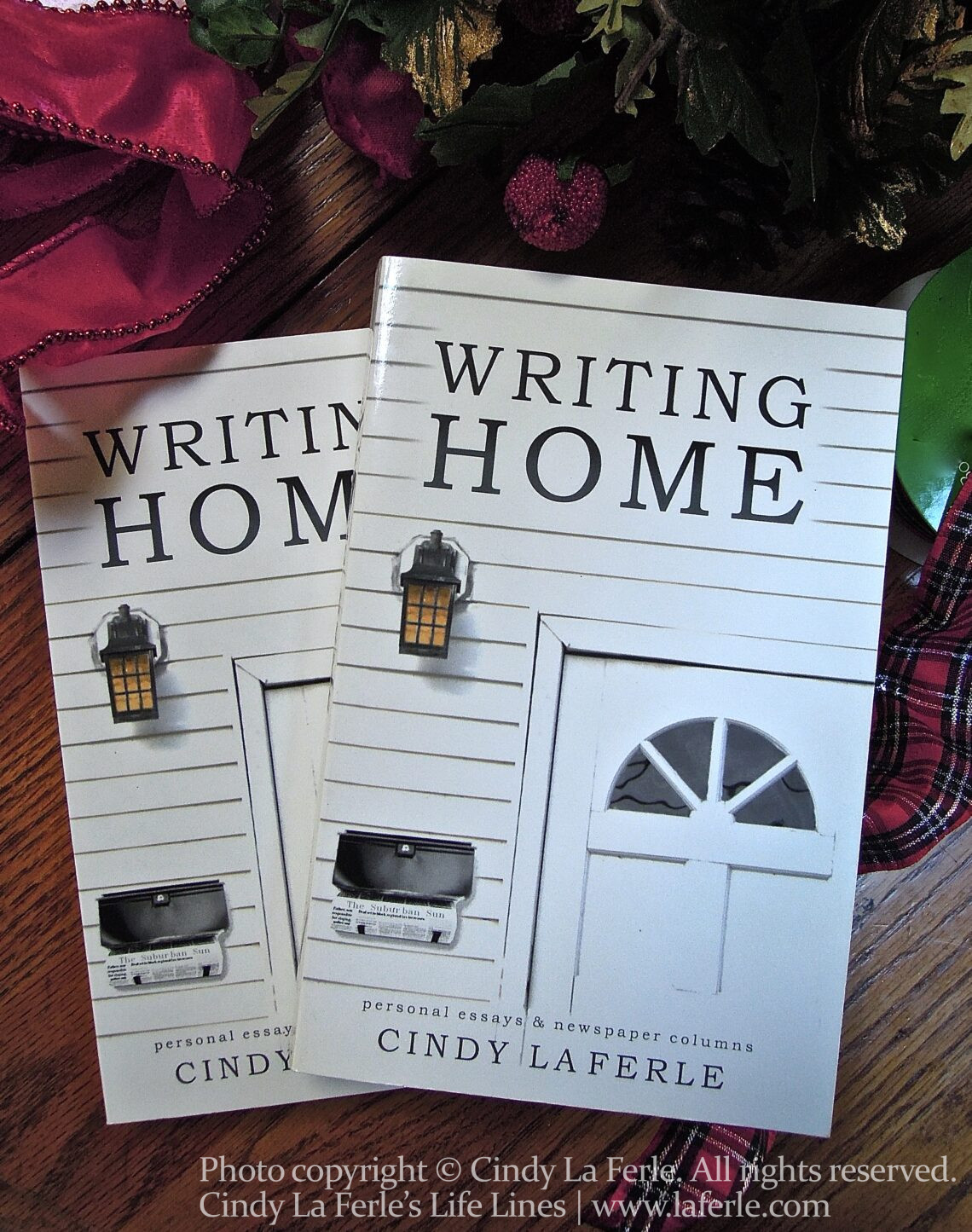
A slightly different version of this column was first published in The Daily Tribune in May 2004, and is reprinted in its original form in my book, Writing Home.

Top photo: Graduation day at University of Notre Dame, May 18, 2008. Pictured are Andrea Benda (who became Nate’s wife in September 2012), Nate La Ferle, Doug La Ferle (Nate’s dad) and me.  

permalinkRead More CommentComments (0) CatColumns & essays, Events & news

Fear of missing …what?

“It’s hard not to develop this 21st-century form of anxiety when one glance at your smartphone reveals a thousand awesome things your friends — and enemies — are doing.” — Martha Beck, “The Grass Ain’t Greener”

circusIt’s no secret that I’ve carried on a love-hate relationship with social media for years.

Using LinkedIn as one example: I love how it connects us with colleagues and expands our career-networking potential. Using Facebook as another example: I hate how it tempts us to overplay our achievements or flaunt things that ought to be kept personal.

So far, I’ve been Facebook-free for more than six weeks. The last time I suffered social-media overload, I deactivated my Facebook account for more than three months. In so doing, I discovered I’d suddenly acquired yards of extra free time — simply because I wasn’t reading status updates on what dozens of “friends” had eaten for lunch, bagged at the grocery store, or watched on television the previous night.

At the same time, I’ll admit it feels weird (sometimes) to avoid being part of something that everyone else is doing en masse. Even my husband makes passing references – daily – to material he’s read on Facebook.

It’s enough to stir up an infectious case of FOMO – Fear of Missing Out. Life coach Martha Beck explores the perils of FOMO in her current O Magazine column (June 2013). As Beck explains it, FOMO manages to convince you that everyone else has more fun, more sex, cooler friends, better meals, bigger jobs, smarter kids, and fancier vacations than you have — and is so much younger- or better-looking than you’d ever be. Of course, FOMO rides high and fast on the wheels of social media, in all forms.

“A powerful way to fight FOMO is to recognize that the fabulous life you think you’re missing doesn’t in fact exist,” writes Beck. “When you feel FOMO coming on, remind yourself that practically every image you see on practically any screen is likely misleading.”  To find out why, you absolutely must read the rest of Beck’s spot-on article. I promise, you’ll nod your head at every paragraph.

In the meantime, I’m following Beck’s advice and living fully in the ordinary moment – without posting photos of what I ate for breakfast. Seriously, you haven’t missed much.

permalinkRead More CommentComments (5) CatColumns & essays, Events & news

Gardening for the spirit

When I go into the garden with a spade and dig a bed, I feel such exhilaration and health that I realize I have been defrauding myself in letting others do for me what I should have done with my own hands.”  ~Ralph Waldo Emerson

IMG_0582Throughout my life, gardens have provided many spiritual lessons and moments of refuge.

Among them was the fern garden my Scottish grandfather tended in his back yard on Detroit’s west side — an oasis that restored his spirit during the sad summer my grandmother died. The essay I wrote about that garden was published in both British and American editions of Reader’s Digest magazine, and is included in my book, Writing Home.

Today, my own garden is so much more than a plot for herbs and perennials. Working the soil, I’m often mentally untangling one of my elderly mother’s health problems. Or, while preparing a bed for basil and rosemary, I might be digging my way through a stubborn case of writer’s block. Or just daydreaming.

As I reminded my husband recently, gardening is the best therapy I know. (The money I ought to save for a psychiatrist is well spent on garden gadgets and plants at the local nurseries.)

Along these lines, several authors have written inspiring books on gardening as soul work. Here are a few of my favorites.

Praised as a hymn to nature, Diane Ackerman’s Cultivating Delight (HarperPerennial Library) is a sensuous garden memoir. With the keen eye of a naturalist, Ackerman recounts her back-yard discoveries through the seasons, including the time she uncovered a tiny frog asleep inside a tulip.

“By retreating farther and farther from nature,” Ackerman warns, “we lose our sense of belonging, suffer a terrible loneliness we can’t name, and end up depriving ourselves of what we need to feel healthy and whole.”

gardenjunkhead

“No matter how saddened I become by the events of life, when I see the world as a garden, I feel better,” writes author Julie Moir Messervy in The Magic Land: Designing Your Own Enchanted Garden (Macmillan). A landscape designer and consultant, Messervy also sees the garden as a perfect outlet for personal growth. Her book includes exercises to plan your own paradise, whether you want an elaborate storybook garden with a gazebo or a Zen-like oasis. I used many of her tips when I plotted my own Japanese garden a few years ago.

The Sanctuary Garden (Fireside) reminds us that any garden can be a place of reflection. Authors Christopher Forrest McDowell and Tricia Clark-McDowell are founders of the Cortesia Sanctuary for Natural Gardening and Healing in Eugene, Oregon. Their illustrated guide provides tips on attracting wildlife as well as ideas for creating space for prayer and meditation.

“One of the most powerful examples of our relationship to the land came to me when witnessing the end of the war in Bosnia,” writes McDowell. “I was touched to learn that the first act of many of the citizens of Sarajevo was to till and plant their gardens.”

So what are you waiting for? Dust off your garden boots, grab a trowel, ditch your bad mood, and dig in.

– Garden photos (copyright) by Cindy La Ferle –

permalinkRead More CommentComments (7) CatBook reviews, Columns & essays

Housework by the book?

Excuse the mess, but we live here.” — Roseanne Barr

IMG_2347When we moved into our first apartment in 1980, my architect husband and I rarely discussed the delicate issue of housework. Newly married and devoted to our business careers, Doug and I left early for work every weekday morning, tripping over mounds of unfolded laundry and dust bunnies as we headed for the door. We rushed through domestic chores on Saturdays, never quite sure who was responsible for emptying the trash or disinfecting the toilet bowl.

All of this came tumbling back last summer, when I discovered some old books on housekeeping at a second-hand bookstore. Blowing layers of dust from their covers, I was rewarded with some fascinating glimpses of early Americana.

First published in 1924, Good Housekeeping’s The Business of Housekeeping, by Mildred Maddocks Bentley, was a veritable textbook on the domestic arts. Its mildewed, yellowing pages reminded me that household management was once taken seriously. Speaking to young brides, the book covered such topics as “Managing Servants and Housekeepers,” “Dishwashing Three Times a Day,”  “Sprinkling and Folding,” and “The Chemistry of Washing.”

As the book’s title suggested, Mrs. Bentley meant business:  “The good housekeeper must bring to her task of housekeeping every one of the qualities that make for a successful executive in the downtown business world.”

IMG_2350

Another artifact, Housekeeping Made Simple (The Homemaker’s Encyclopedia, Inc.), was published in 1952, two years before I was born. Editor Miriam B. Reichl revealed that, after WWII, women had lightened up a bit and were looking for labor-saving methods. The average housewife, after all, no longer employed domestic help.

Reichl’s book contained some amusing black and white photo-illustrations. One showed a woman smiling broadly (and, yes, wearing high heels and pearls) as she demonstrated several ways to use a vacuum. Another shot featured an attractive woman doing laundry in a satin evening gown. Male models were conspicuously absent.

Back in the late ’70s, when I was single and rented my first apartment, books devoted to home economics (or “Home Eck” as my girlfriends called it) were rare — although my friends and I could have used a few tips on stocking a pantry or planning balanced meals. We left housework to the cleaning fairies.

Even today, few men or women admit they enjoy doing anything remotely domestic, unless it makes them as rich as Martha Stewart. Homemaking is messy business, after all — something we’d rather hire someone else to do if we can afford it.

“You keep a house, but you make a home,” observes anthropology professor Mary Catherine Bateson in Composing A Life (Plume/Penguin). “As we free the ideas of home and homemaking from their links to old gender roles, we can now also draw on metaphors of home to enrich our perceptions of the world.”  Home, after all, is where everyone begins.

Of course, I’d never welcome another era in which women have few career options beyond vacuuming. And I’d hate to see ironing raised to an art form. But I agree with Bateson when she suggests that we lose our sense of place — the foundation that keeps us grounded — when we neglect the home front. The driveway becomes a mere parking lot; the house exudes an atmosphere as impersonal as a chain motel.

Lately I’ve noticed a new crop of home-care guides in local bookstores. These books are saturated with a deep yearning for the comfort of roots and shelter. Unlike their predecessors, they’re refreshingly devoid of sexism, though women will most likely buy them. Whether or not younger Americans will embrace a homemaking revival remains to be seen. Right now, we’re still arguing over whose turn it is to clean the bathroom.

–Part of this essay is excerpted from my column collection, Writing Home, now available in Kindle and print editions on Amazon.com —      

permalinkRead More CommentComments (4) CatBook reviews, Columns & essays

The mom I used to have

 Caregivers are forced to let go of a loved one little by little, again and again, sometimes over a span of many years.” — Leeza Gibbons, Take Your Oxygen First

Crafted from fine cotton yarn, the black cardigan sweater became a staple in my spring wardrobe after my mother bought it for me 10 years ago. Rediscovering it in the back of my closet last week, I suddenly recalled a happier memory of Mom – a time when I wasn’t overwhelmed by what social workers describe as “caregiver burnout.”

closet2

And then came an unexpected flood of tears.

It’s not like me to fall apart over a sweater while I’m reorganizing my closet. Usually, I welcome the chance to shove my winter-weary woolens back into storage and replace them with the lighter fabrics of spring.

But then again, my mother hasn’t been herself for several seasons, either.

Things began to unravel after my son left for college — just when my husband and I earned the freedom of our newly emptied nest.

First, we noticed Mom was repeating her favorite stories more often than usual. Then her friends would call to report that she’d forgotten to show up for club meetings and lunch dates. She’d drive herself to the ER during her panic attacks, which started occurring with alarming frequency. Not long afterward, her doctors told me to confiscate her car keys.

Mom was 79 and had been widowed for 16 years when she was officially diagnosed with vascular dementia in 2009. She was also battling heart disease and severe hearing loss.

Her only child, I was handed full responsibility of her medical care along with a checklist outlining her worrisome diagnosis.

“Start researching senior housing with memory care – now — so you’ll have choices,” her primary care physician advised. The doctor also asked if I had durable power of attorney (which I did) and reminded me to get all the legal documents in order.

At the time, Mom lived alone in a condo near my house. She refused to consider any type of senior housing, regardless of the fact that she’d been in and out of William Beaumont Hospital half a dozen times, and averaged 45 medical visits annually for countless illnesses, real and imaginary. (I took her to every single one.)

Facing the reality

More than anything, I wish my mother would have helped map the course of her own future. But no matter how tactfully I approached the topic of assisted living — and offered to schedule tours of the best facilities — she’d look at me as if I’d asked her to move to the Outer Hebrides with nothing but a toothbrush.

Regardless, I researched several senior housing options on my own. And just as the doctors had predicted, the decision was made for us — after yet another trip to the ER with Mom in December of 2011.

The research I’d done earlier made our next step a little easier. While my mother recovered from heart surgery at the hospital, my husband and I put a deposit on a studio apartment at an assisted living residence near our home. We moved her there the day she was released from rehab.

By this time, Mom’s dementia had progressed to the point where she couldn’t remember that she’d had surgery and spent weeks in the hospital. I tried to preserve her dignity while sugar-coating the progressive dementia issue. I reminded her that her health and safety were our biggest concerns. Through it all,  she insisted she was “perfectly capable” of caring for herself at home.

And how could I blame her for denying reality?  Lately, I wish I could rewrite the whole scenario, too.

The grieving process 

Momand me1Saddest of all, dementia robbed Mom’s interest in almost everything she once enjoyed — Early American history, needlework, reading, lunch with friends. And clothes shopping.

In her prime, Mom had elevated bargain shopping to an art form, taking pleasure in scouting for gifts for people she loved. Even when I reached middle age, she’d insist on purchasing a new item of clothing for me whenever the seasons changed.

Which brings me back to the black sweater I mentioned at the start.

Ten years ago, Mom knew I’d been hunting for such a sweater — a classic black cardigan that would bridge the seasons. I’d shopped at several stores in two malls — but with no luck. I’d nearly given up when I discovered a T. J. Maxx shopping bag hanging from the side door of my house one afternoon. In it was the perfect black cotton sweater, which Mom had found on sale at one of her favorite haunts.

When I rediscovered it last month, my unexpected tears released a tsunami of mixed emotions.

Until then, I’d been raging inwardly at the dementia that had devoured my mother’s mind and rendered her incapable of making her own decisions. I hadn’t fully realized that I was grieving the loss of my “real” mother — the woman who had shared her wisdom and recipes, encouraged my career, babysat my son, and took delight in buying me new clothes.

Facing the unfixable

The ongoing nightmare of dementia is hard to explain to others who haven’t walked through this dark tunnel with a parent or a spouse. Whether you’re talking about Alzheimer’s disease or vascular dementia, helping a loved one with a memory loss disorder isn’t the same as nursing a heart condition or a broken limb.

“With memory loss disorders, there is no comfort to be found in hoping for future recovery or improvement,” writes Leeza Gibbons in Take Your Oxygen First, an excellent guide to caring for a loved one with memory loss.

“If we don’t grieve for what we have lost, we can’t experience what we have now,” Gibbons goes on to explain. “In the end, life isn’t about choosing what happens to us; we only get to choose how to respond to it.”

As I write this, Mom is in a nursing rehab facility after fracturing her back at her assisted living residence last month. Her team of physical therapists can’t determine, at this point, if she’ll learn how to walk again. She is twice as fearful and confused. I do my best to remain strong for her, though I’m often exhausted, hopeless, and resentful — and ashamed for feeling that way, too.

In my better moments, I learn everything I can about my mother’s health problems and advocate for her 24/7. I’ve also learned to guard my own health — and my time — knowing that I’m not the only one who depends on both.

Meanwhile, the black sweater serves as an emblem of my mother’s best years; a tangible reminder of her former self. But I doubt that I’ll wear it again. It doesn’t wrap around me as well as it did when Mom first gave it to me — as if to remind me that I’m not the same woman I was 10 years ago. – Cindy La Ferle

For tips on dealing with caregiver stress from the Mayo Clinic, click here

permalinkRead More CommentComments (8) CatBook reviews, Columns & essays, Events & news
CSS Template by RamblingSoul | Tomodachi theme by Theme Lab